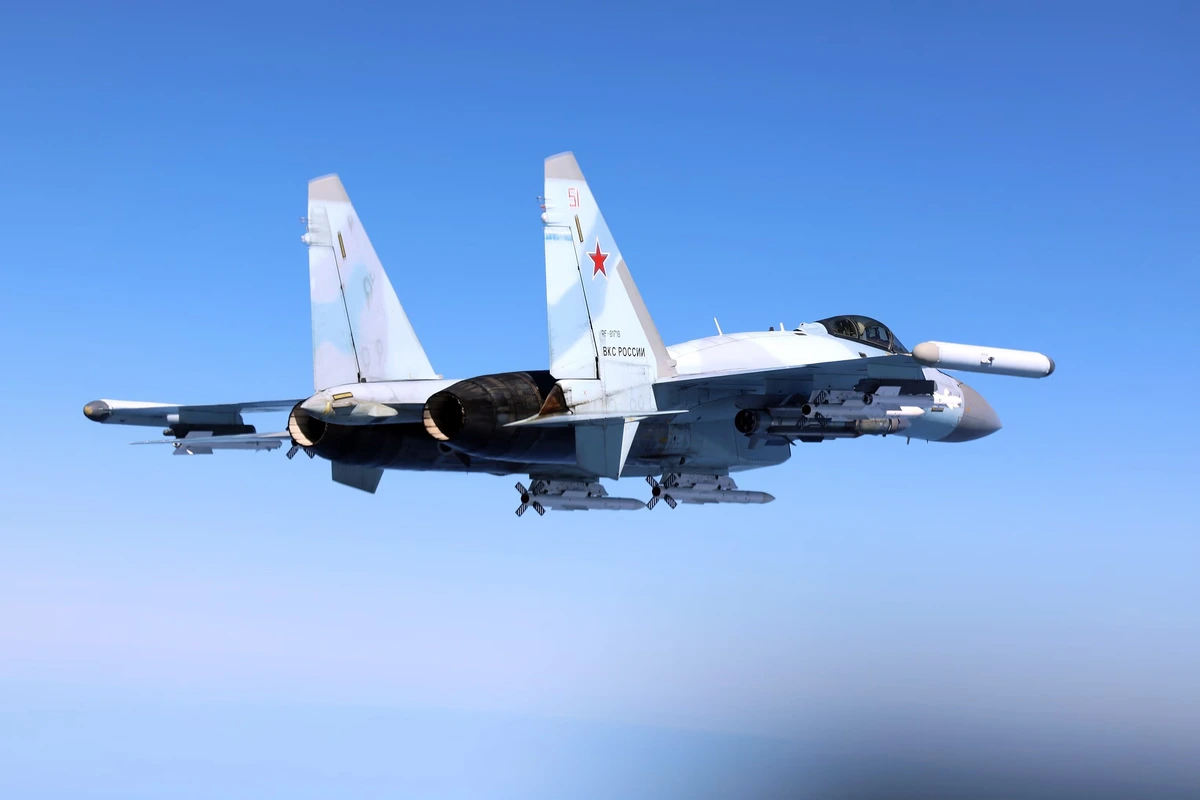
Two Russian fighter jets “repeatedly and dangerously” intercepted an RAF spy plane above the Black Sea, the Ministry of Defence (MoD) has said.
One of the jets flew so close to the British reconnaissance aircraft that its emergency systems were triggered, including the disabling of its autopilot.
The MoD says the incident is one of the most dangerous confrontations between Russian jets and British Rivet Joint aircraft since 2022, when a plane fired a missile over the Black Sea.
A Russian jet flew just six metres away from the nose of the unarmed Rivet Joint, and carried out a further six passes in front.
“This incident is another example of dangerous and unacceptable behaviour by Russian pilots, towards an unarmed aircraft operating in international airspace,” defence secretary John Healey said after the incident.
“These actions create a serious risk of accidents and potential escalation.”
The Rivet Joint was conducting a routine flight in international airspace above the Black Sea as part of the UK’s work with allies to “secure Nato’s eastern flank”, the MoD said.
The aircraft use advance sensors for electronic surveillance.
Mr Healey added: “I would like to pay tribute to the outstanding professionalism and bravery of the RAF crew who continued with their mission despite these dangerous actions.
“Let me be very clear: This incident will not deter the UK’s commitment to defend Nato, our allies and our interests from Russian aggression.”
It comes after the Defence Secretary revealed in April that the UK had tracked three Russian submarines that loitered over critical undersea infrastructure in the North Atlantic for a month before retreating.
RAF crews flew more than 50 missions using P-8 Poseidon submarine-hunting aircraft in the operation that involved 500 British personnel and support from allies.
On Tuesday, a government minister admitted that sanctioned Russian vessels have entered British waters at least once a day since the government brought in measures to tackle the shadow fleet in March. None of these vessels have been intercepted.
The National Security Strategy (Joint Committee) questioned members of the Ministry of Defence (MoD) and the Department for Science, Innovation and Technology (DSIT) on Monday to follow up on a review in September that claimed the government was “too timid” in protecting undersea cables from state actors.
In March, the MoD announced new powers allowing armed forces to board sanctioned boats that cross into British waters as part of measures to tackle the flow and power of Russia’s shadow fleet vessels.
The i reported in April that more than 120 sanctioned tankers had crossed British waters since the new powers were brought in.
A Ministry of Defence spokesperson said: “The UK is disrupting and deterring shadow fleet vessels and their harmful maritime activity, and since October 2024, we have challenged over 700 suspected shadow fleet vessels.
“We will not comment on specific operational planning or give a running commentary, as this could compromise our ability to successfully take action against these ships, only benefitting our adversaries.
“Any target ship will be individually considered by law enforcement, military and energy market specialists before an operation is executed.”