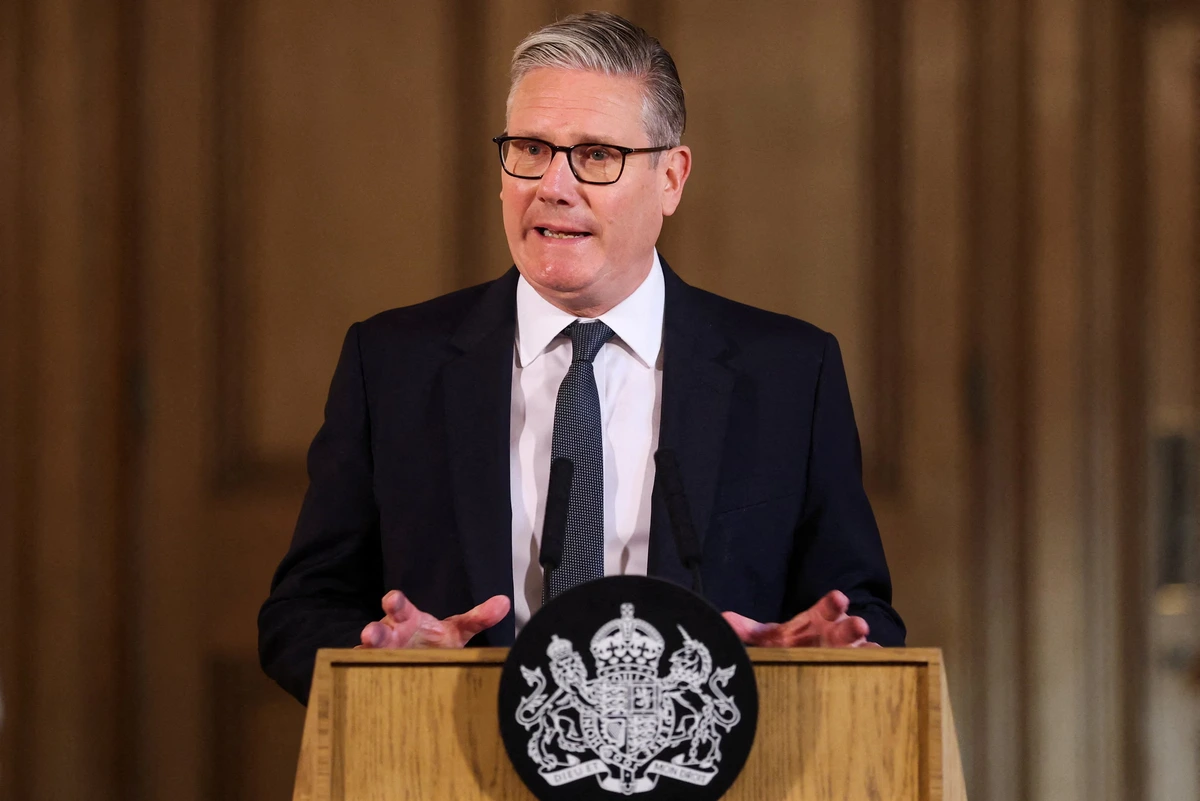
In the wake of terrible election results for Labour, the word of the weekend is “timetable”. Instead of nominating Angela Rayner for a leadership election, MPs are queuing up to call for Keir Starmer to set a timetable for his departure, which is code for “Andy Burnham but not yet”.
This means that Rayner has missed her chance. Instead of striking with the ruthless efficiency required to change leader, the Labour Party talks about procedure. A “timetable for an orderly transition” is exactly the form of words it used to conceal its embarrassment at getting rid of its most successful ever leader 20 years ago.
Today it is used to conceal its embarrassment at failing to get rid of an unsuccessful leader.
It means that Labour MPs have decided that they can live with losing 1,400 councillors, going from in government to having one tenth of the seats in the new Welsh Senedd and failing to beat Reform UK in Scotland, because things are not as bad as they could have been. It means that they have looked hard at the alternative candidates for prime minister and the only MPs who have gone public have said, “I’ll have that one, please,” pointing to a candidate who is not actually available.
The moment is slipping away from Rayner. It has been reported that Ed Miliband, the energy secretary, suggested to Starmer two weeks ago that he should consider setting out a timetable for his departure. Miliband’s spokesperson said, “We do not accept this account,” which is spokesperson-speak for, “It’s basically true.”
The significance of Miliband’s intervention, though, is that he supports Burnham’s return to parliament, which means that he is opposed to Rayner taking over.
The doubts about Rayner just won’t go away. Her tax affairs, which she thought were definitely going to be sorted out – and in her favour – before the elections, are still being investigated.
Other Labour MPs who might have been expected to join the Rayner campaign have drifted to Burnham instead. Or, rather, to demanding a timetable, by which they mean that Starmer should set a date for his departure and lift his veto on Burnham returning to the Commons in a by-election.
Neither of those is going to happen soon, which means that they are essentially calling for Starmer to go safe in the knowledge that he will stay for the time being. It is not, to put it mildly, the optimum strategy for a Labour Party wanting to communicate confidence and a bright future.
Just as in 2006, calling for a timetable is a way of waving away awkward questions about the candidate implied by that timetable. In Burnham’s case it is also a means of putting pressure on Labour’s national executive to let him stand as a by-election candidate. This seems naive. The rules preventing mayors from jumping ship are there for a reason, which Emma Reynolds, a cabinet minister, made unexpectedly clear this morning. “If Andy Burnham does come back as an MP in parliament, we would have to have a by-election of the greatest magnitude [in Manchester],” she said, “and there's a possibility we could lose that by-election for Manchester mayor.”
Handing over Greater Manchester to Reform would hardly be a great way to launch Labour’s all new, totally different prime minister. That prospect ought to prompt other doubts to creep into the Westminster game of calling for a timetable. Namely, what is it that Burnham would bring to the job that would turn things round for Labour? I have heard of one sympathetic MP who came away from an hour-long phone call with him of such inconsistency that they were determined that he should never have the top job.
By playing for time, Labour MPs might be preparing the ground for Burnham to miss his moment too. The longer they have to think about him, the less they might think there is to him. So far, his policy pitches are aimed at the party’s activist base, thus highlighting a structural problem with British politics that might be called “the Liz Truss trap”. If unrepresentative party members get to decide who should be prime minister, it makes changing prime minister in the middle of a parliament a hazardous business.
Of all Starmer’s inept responses to the election losses, the only one that made any sense was his declaration that Labour shouldn’t be “tacking right or left”.
It may be that the party will take his advice so literally that it decides to do nothing at all. That is better than choosing Labour’s equivalent of Truss to replace him, but it is not as good as finding someone who has the qualities needed to lead the country out of the doldrums and away from the prospect of Nigel Farage as prime minister in 2029.