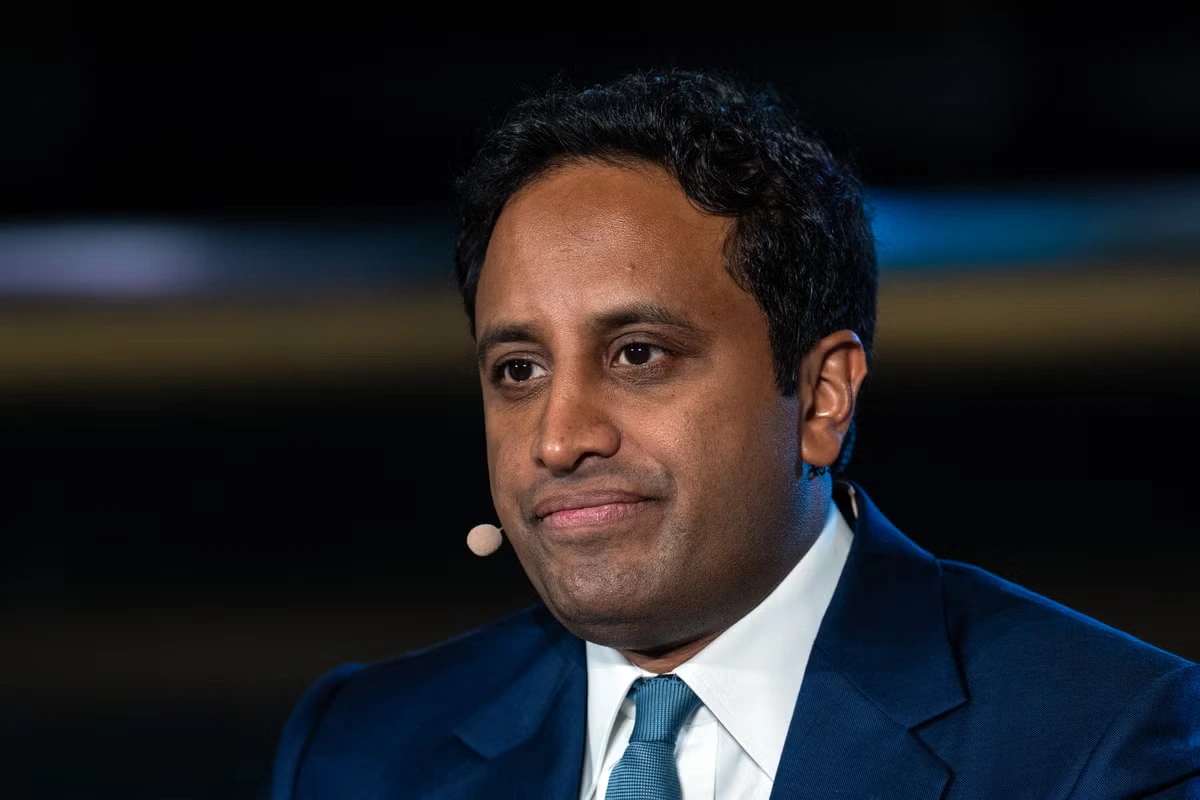
Our new prime minister is widely liked. Tony Blair recently said, “he’s a genuinely people person; you know, he’s interested in people”. His Labour detractors have admitted how “likeable” he is, and even his opponent, Kemi Badenoch, leader of the Conservative party, has called him a “nice guy”.
The problem is that this isn’t necessarily a good thing. Because according to Badenoch, Andy Burnham isn’t just a people person – he’s a people-pleaser.
The distinction is crucial. A people person naturally gets on with people and finds it easy to socialise; a people-pleaser is so focused on what other people think about them that they prioritise approval and validation over their own values and needs.
As a recovering people-pleaser myself, I know what I’m talking about. People-pleasing might look like “being a nice person” and “caring about others” from the outset – but really, it’s just plain old insecurity.
People-pleasing might even help you reach success – I had multiple novels published in over a dozen countries alongside my career as a journalist, all before I was 30 – but it only works up to a point. In order to have a sustainable, successful career without burnout or anxiety getting in the way, you need to be able to do what’s right for you without spending hours worrying about what others think. You also need to be able to follow your gut even if it means letting people down. In other words, you need to be able to say “no”.
This is an essential shift for any people-pleaser in the workspace (and indeed, all arenas of life), but crucial for a leader. As Badenoch went on to tell the BBC: “[Being prime minister] is not a popularity contest. It is making the lives of all of the people outside this building better. And [Burnham] has not said what he's going to do. It’s all airy-fairy stuff.'"
She’s not the only one to call the PM out on his people-pleasing. Back in 2007, Burnham spent seven months as deputy to then-chancellor Alistair Darling and won himself a reputation as a people-pleaser who couldn’t say no to cabinet ministers. Darling, who died in 2023, is said to have described Burnham as behaving “like a lorry on ice”, because he swerved around all the time. The prime minister even admitted his people-pleasing penchant in his 2024 book Head North, Burnham himself explaining: “I would much prefer to say ‘yes’.”
Emma Reed Turrell, psychotherapist and author of Please Yourself: How to Stop People-Pleasing and Transform the Way You Live, points out: “Sometimes saying ‘yes’ isn’t kind at all if the truthful answer is ‘no’. There’s an important difference between keeping the peace and creating peace. One avoids discomfort in the moment; the other sometimes requires you to have the uncomfortable conversation.”
When it comes to whether a people-pleaser can ever be a good leader, she says: “Some of the best leaders are deeply empathic and genuinely care how decisions affect people. People-pleasers often bring warmth, diplomacy and emotional intelligence. They’re good at spotting tension before anyone else does and can build trust quickly because people feel understood by them.”
The problem is when caring about people’s feelings develops into an inability to tolerate disappointing others. “Leadership requires the capacity to withstand disapproval,” she explains. “If your sense of self depends on being liked, you’ll eventually avoid difficult conversations, delay unpopular decisions or try to keep everyone happy. The healthiest leaders aren’t those who never upset anyone. They’re the ones who can make difficult decisions without becoming defensive or cruel.”
In other words, it’s all about having boundaries. When I first came across the concept of having boundaries in my journey to recover from people-pleasing, I dismissed it as therapy-speak: surely nice people didn’t repeatedly let others down? And yes, okay, our needs are important too, but we don’t need to go on about them the whole time, right?
I quickly learned how wrong I was. People-pleasing and saying yes don’t win you respect; boundaries do. Dr Ana-Maria Bliuc, a political psychologist at the University of Dundee, explains: “If people-pleasing means being unable to say no, avoiding necessary conflict or lacking clear boundaries, then this would be a weakness in any political leader — as good leadership requires compromise but also the ability to defend a position, make difficult decisions and accept that some people will be disappointed.”
The problem is that disappointing others is a people-pleaser’s worst nightmare. Often, it is deeply ingrained. Reed Turrell explains that people-pleasing often develops at a young age, and is all about trying to find safety: “Many people-pleasers grow up believing that love, approval or stability has to be earned by being useful, agreeable or easy to live with. It often works brilliantly until the cost of constantly managing other people’s comfort becomes greater than the benefit.”
Burnham hasn’t ever self-identified as a people-pleaser, but he has spoken about the “imposter syndrome” he’s felt as a result of his working-class background. “Like many people with a similar background to me, I have had bad doses of imposter syndrome at every stage of my life – at Cambridge University, in parliament and in Whitehall,” he told New Statesman.
Dr Bliuc believes Burnham’s comments show humility rather than weakness. “Humility can make leaders more open to advice, less defensive, and less prone to mistakes driven by overconfidence or arrogance,” she points out. “This is broadly consistent with evidence that agreeable leaders can be highly effective, although humility is most valuable when paired with confidence and firmness in decision-making. If Burnham can sustain that balance remains to be seen.”
But Reed Turrell adds that imposter syndrome can reinforce people-pleasing. And vice versa. “People with imposter syndrome often carry a persistent sense that they have something to prove or a fear of being ‘found out’,” she explains. “That can make external approval feel especially important. The more you doubt your own judgement, the more tempting it is to look to other people for reassurance that you’re on the right track.”
The only way out of people-pleasing is… to stop. That means saying “no”, feeling the discomfort of disappointing someone, and then realising you’ve survived. Eventually, it becomes easier, and you start to feel the benefits of no longer abandoning yourself. It doesn’t mean you stop caring about people. I’ve learned that I’m more empathetic now I’ve quit people-pleasing, because I have the capacity to really be there for people – and when I can’t, I’m honest and I tell them.
I feared it would lead me to lose all my friends and fail professionally, but the opposite has happened: I feel much closer to my true friends, and in the workspace, I’ve found myself being treated as more of an equal by people I spent years admiring. The best part is that now I admire myself too, because I’m no longer dismissing my feelings or concerns – I’m making difficult choices and being brave enough to verbalise them out loud.
This is exactly what Burnham will need to do as prime minister. Dr Bluic – who cautions that there is a difference between being agreeable and lacking boundaries – says: “The key question is if he can combine warmth and cooperation with consistency, firm boundaries and the capacity to make unpopular decisions.”
It seems Burnham would do well to take the advice that Tony Blair recently said he would give his younger self back in 1997 when he took on the role of prime minister: “I think you may think you’re going to be loved, but you’re not going to be.”